




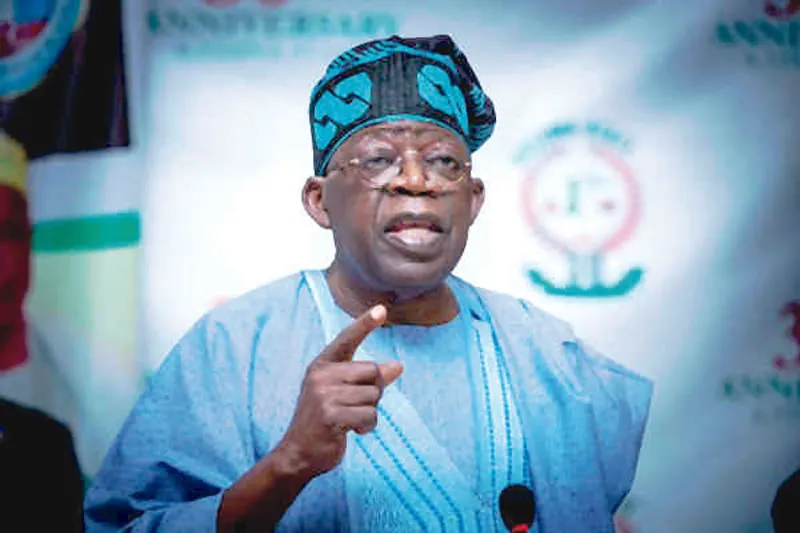
West Africa’s intra-regional trade remains a challenge at 10%, a figure that can no longer be ignored, according to President Bola Ahmed Tinubu.
Speaking at the West Africa Economic Summit, Tinubu said, “Intra regional trade remains on that 10% a challenge you can no longer ignore. The low trade is not due to a failure of will, but a failure of coordination.”
The President noted that West Africa is one of the last great frontiers of economic growth, but opportunity alone does not guarantee transformation.
“Opportunities, not just wishful thinking, we must earn it through vision integration, policy coherence, collaboration, and capital alignment,” he said.
Tinubu called for collective action, investment in infrastructure, and coordinated policies to drive growth. “We must together strengthen our regional value chains, invest in infrastructure, and coordinate our policies,” he stated.
The President pointed out that the region’s greatest asset is its youthful population, but this demographic promise can quickly become a liability if not matched by investments in education, digital infrastructure, innovation, and productive enterprise.
“Our prosperity depends on regional supply chains, energy networks, and data frameworks. We must design them together, or they will collate separately,” he said.
Tinubu cited examples of joint projects that demonstrate what is possible when West African countries work together, such as the Lagos-Abidjan highway and West African Power Pool. “We must move from declarations to concrete deals, from policy frameworks to practical implementation,” he urged.
The President also stressed the need for West Africa to become more competitive and resilient, investing in local processing and regional manufacturing to unlock the region’s mineral wealth. “The era of ‘from pit to port’ must end. We must turn our mineral wealth into domestic economic value, jobs, technology, and manufacturing,” he said.
Tinubu called for actionable outcomes from the summit, including a renewed commitment to ease of doing business, enhanced inter-regional trade, improved infrastructure, and innovative ideas to drive growth and prosperity.
“Let us build a West Africa that is investable, competitive and resilient, one that lives with vision, responsibility and unity,” he said.
Speaking earlier, the Minister of Foreign Affairs, Ambassador Yusuf Maitama Tuggar, reiterated the region’s potential for growth and development.
He said, “We’re here today to build on that enabling environment. We’re not reinventing the wheel. As an economic community, West Africa enjoys freedom of movement and a framework to facilitate trade, pool electricity, and integrate transport corridors,” Tuggar said.
The Minister noted that West Africa’s economic trajectory is unsustainable, with only 8.6% of the region’s $166 billion exports in 2024 remaining within its borders.
“Imports followed the same pattern, heavily tilted toward partners outside the continent. Machinery and manufactured goods from China, India, the United States, and the European Union dominate our import flows while we continue to export and process raw materials,” he stated.
Tuggar called for more efforts to bring the informal sector into the formal economy, leveraging economies of scale and efficiencies to accelerate growth. “As governments, as states, and the region, we need to do more to make it easy to bring that activity within the formal sector,” he said.
The Minister also emphasized the importance of local processing and investment in the region. “Bring that investment, bring that local processing, let’s see our transport, economic infrastructure and other building blocks for prosperity grow,” he urged.
Tuggar expressed optimism about the region’s potential, citing its rich natural resources and youthful population. “West Africa can and should be part of this.
“I read a couple of weeks ago in an American newspaper that China had a monopoly on some of the rare minerals vital to the new industry in which the future will be built. Not so. We have those same minerals here in Nigeria and across the region,” he said.






Leave a comment