





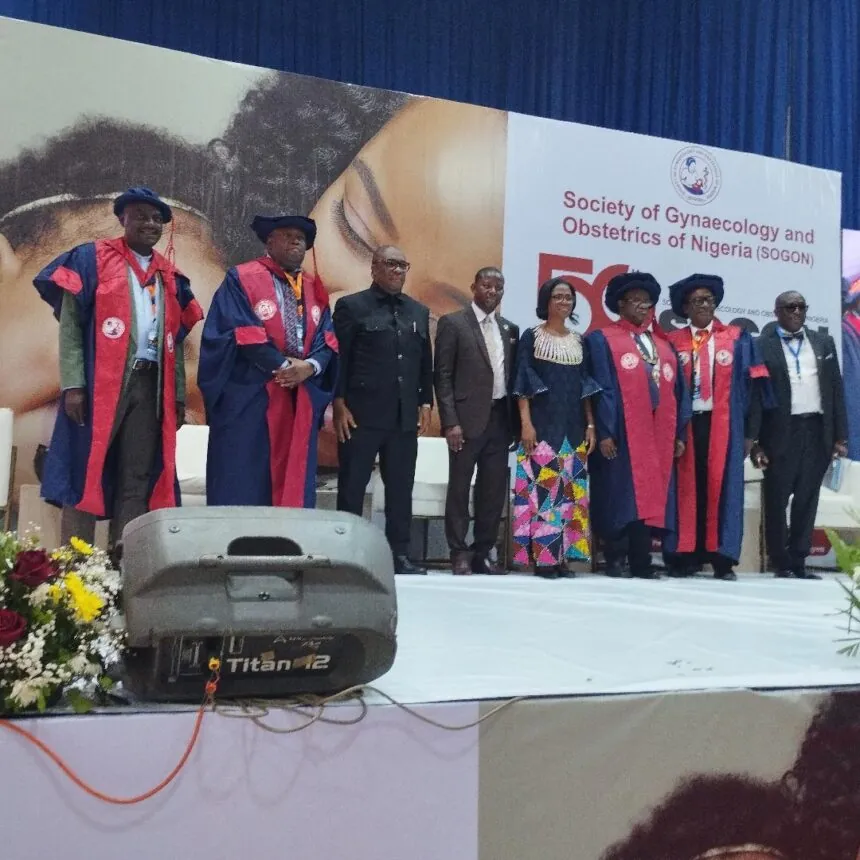
Experts at the Society of Gynaecology and Obstetrics of Nigeria (SOGON) have warned that Nigeria must seek transformative, not incremental, reform to reach its 2030 SDG objectives, citing gaps in maternal health, gender equality, and reproductive rights…
Speaking at the 59th SOGON conference in Ibadan with the theme ‘Reproductive Health Benefits: Panacea for Attaining the SDGs’, Minister of State for Health, Dr Iziaq Adekunle Salako, stated that gender equity, poverty, education, and economic advancement all have an impact on reproductive health, which is at the core of sustainable development.
The Minister, represented by Dr Babatunde Ladi-Akinyemi, declared that Nigeria’s maternal mortality ratio remains one of the highest globally, with 512 deaths per 100,000 live births, stressing that reducing it to fewer than 70 per 100,000 by 2030, the target for SDG 3.1, requires urgent and intensified efforts.
He added that with only five years left until the SDG deadline of 2030, prenatal, neonatal, and child clinics, as well as our adolescent and youth clinics, are the direct routes to sustainable development.
“It goes beyond medical treatment or test results from the laboratory. It involves discussions around basic human rights issues, enabling individuals to make informed choices about their bodies, families, and their future,” he said.
Salako assured that the policy shifts and reforms in the health sector by the federal government have enabled more holistic programming to address the interconnected challenges of poverty, gender inequality, and social exclusion, all key contributors to poor reproductive health outcomes.
The minister made a compelling argument for greater male involvement in reproductive health to improve family health outcomes and underlined that SDG 5.2, which aims to eradicate violence against women, is inextricably linked to advancements in reproductive health.
He urged SOGON members to continue providing invaluable services to Nigerian women and families, uphold clinical excellence, and advocate for policies that expand access to quality reproductive health services.
“The path to 2030 is short; the challenges are immense. But through collective will and coordinated action, we can ensure reproductive health becomes a driving force for achieving Nigeria’s SDG goals,” he declared.
Former Health Minister, Professor Isaac Adewole, called for SOGON members, government agencies, and communities to support a critical government priority, specifically the MAMI initiative, which aims to reduce maternal mortality and improve maternal and newborn outcomes in Nigeria.
“We are trained people; we are actually the generals, and so we should be leading the battle to ensure that no woman dies while giving life and that we take care of the young ones. This is a sacred mandate which all obstetricians and gynaecologists must fulfil,” he declared.
Professor Peter Ebeigbe, the keynote speaker, highlighted how climate change, resource scarcity, migration, insecurity, and poverty intersect to disrupt reproductive health, citing examples of displaced pastoral communities whose women cannot safely give birth and whose children lose access to education.
According to him, Nigeria must urgently rethink its priorities, confront corruption, and strengthen governance or risk missing the 2030 Sustainable Development Goals (SDGs).
Despite gaps, he maintained that “five years is still a long time” and that the Nigerian government could pursue economic diversification outside of oil, fight corruption, and make significant investments in workforce training.
He urged the health professionals, among other things, to uphold moral leadership, form cross-sector partnerships to advance SDG-related reforms, and participate in national advocacy for reproductive health.
President of SOGON, Prof. Okechukwu Ikpeze, charged the obstetricians and gynaecologists to raise standards of practice and ensure that no woman in Nigeria dies unnecessarily during childbirth.
He said, “Health is key; it’s a foundation for socio-economic improvement, and it’s also an index of how a society is performing.” A society with low health indices is a disaster. So, if we improve health indices, definitely everything will grow.”
Oyo State Health Commissioner Dr Oluwaserimi Ajetunmobi, who represented Governor Seyi Makinde, said every maternal death is a tragedy that leaves a permanent scar on our collective conscience, and every preventable complication is a reminder that Nigeria is far from complete reproductive health.
She said that the SDGs are still within reach if efforts are intentional, inclusive, and strategic and asked that the conference come up with new ideas, strengthen existing partnerships, and inspire actionable outcomes to protect the dignity, health, and future of every woman and every child.








Leave a comment