





The Federal Government says it has allocated $200 million as an emergency intervention to cushion the impact of declining donor funds on Nigeria’s health programmes, reaffirming its commitment to sustaining essential services and protecting decades of health gains.
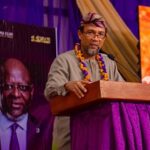
Minister of State for Health and Social Welfare, Dr. Iziaq Salako, announced the allocation while delivering a keynote address at the 9th Annual Health Conference of the Association of Nigeria Health Journalists (ANHeJ) on Friday in Abuja.
Salako said the move aligns with Nigeria’s broader shift toward increased domestic resource mobilization as global funding support continues to contract. Represented by his Special Adviser on Health System Strengthening, Dr. Babatunde Akinyemi, he noted that the government’s financial commitments across major international health initiatives have risen markedly in recent years.
According to him, Nigeria has expanded its co-financing for GAVI-supported immunisation programmes from $8 million in 2017 to $57 million in 2023, signalling stronger national ownership of routine immunisation. He added that the Federal Government now contributes about 20 percent of the total value of Global Fund grants, over $100 million in the current funding cycle.
He further disclosed that Nigeria provides in-kind contributions worth about $150 million annually to the United States’ PEPFAR programme, including personnel, facilities and logistical support. The newly announced $200 million emergency allocation, he said, is part of efforts to mitigate the impact of the U.S. Government’s recent suspension of PEPFAR funding and other donor-supported health programmes.
“These actions demonstrate Nigeria’s readiness to assume greater responsibility for sustaining essential health services and ensuring continuity of care for vulnerable populations,” he said.
Salako emphasised that efficiency, transparency and performance-based financing would remain central to strengthening procurement systems, reducing leakages and ensuring pooled procurement delivers better value for money.
“We are also exploring social impact bonds and blended financing to safeguard essential services while scaling up domestic investment,” he added.
He also underscored the critical role of health journalists, saying accurate reporting on funding flows and programme performance is essential for accountability and public trust.
Chairman of the Nigeria Union of Journalists (NUJ), FCT Council, Comrade Grace Ike, said Nigeria can no longer rely on shrinking foreign grants to protect citizens, particularly in HIV/AIDS, malaria, polio eradication, maternal health and emergency response. Represented by the Council’s Secretary, Mr. Jide Oyekunle, she called for stronger health budgets, mandatory health insurance coverage and increased private-sector participation.
“Nigeria’s health future cannot depend on forces outside our control. We must build a resilient, equitable and self-sustaining health system funded by Nigerians and designed for Nigerians,” she said.
She urged journalists to act as “custodians of accountability” by tracking health spending, educating citizens on domestic financing and highlighting affected communities.
ANHeJ President, Joseph Kadiri, warned that the global decline in foreign aid has exposed structural gaps in Nigeria’s health-financing system. He stressed the critical role of journalists in shaping policy, advancing sustainable health financing and holding institutions accountable.
Representatives from development partners, including Save the Children, IHVN and NAFDAC, reaffirmed their support for Nigeria’s transition toward stronger domestic resource mobilisation.






Leave a comment