



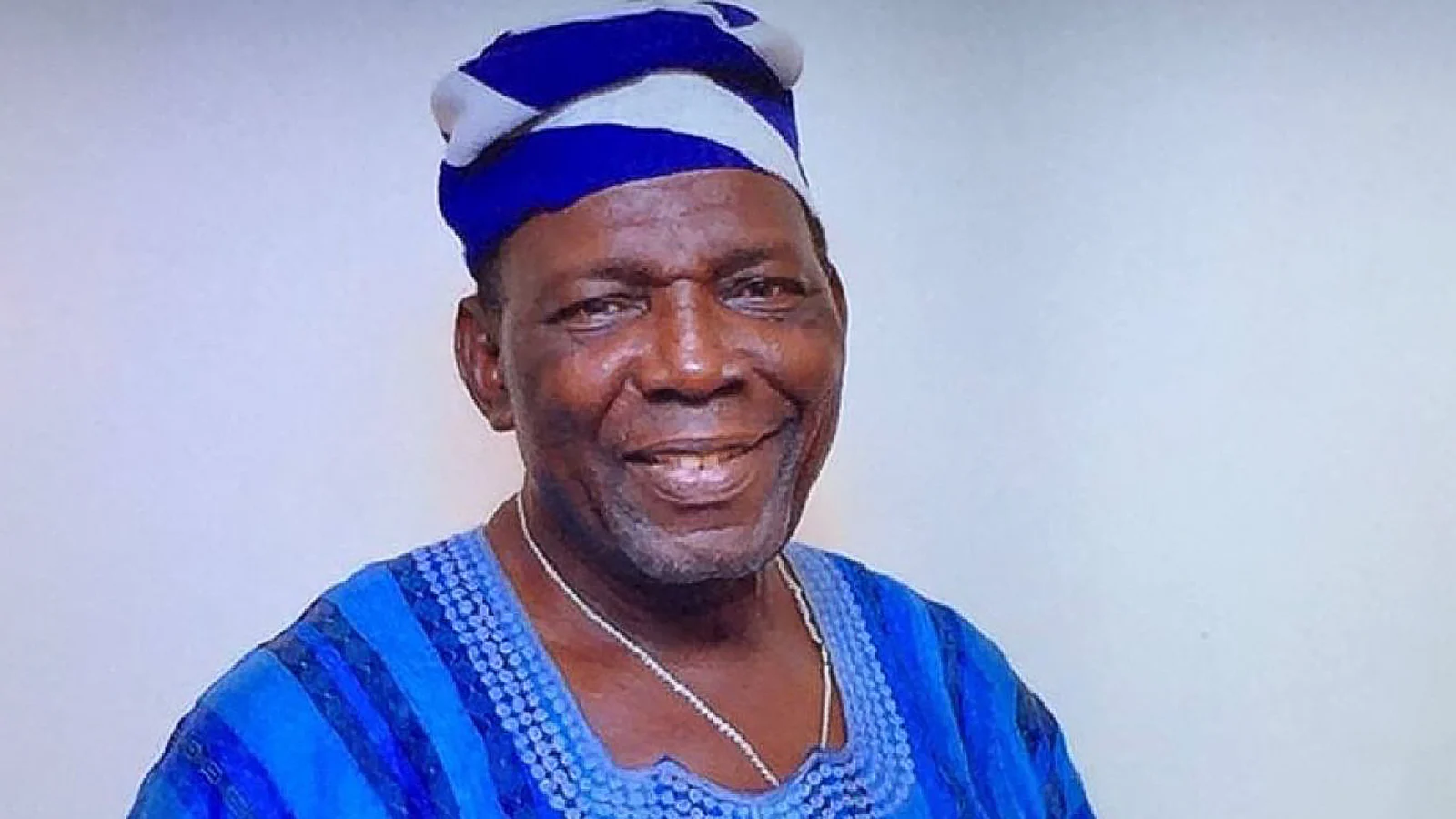
The first Indigenous coach of the Nigerian Super Eagles, High Chief Adegboye Festus Onigbinde, has died at the age of 88.
His family announced the passing on Monday, March 10, 2026, via a message signed by a member of his family, Bolade Adesuyi.
The message read, “With great gratitude to God for a life well spent, we announce the passing of this great man, a Modakeke High Chief, the first indigenous Nigerian Super Eagles football coach, father, husband, grandfather, great-grandfather, brother, and friend, High Chief Festus Adegboye Onigbinde.
“We thank God for the fulfilled life and your contributions to the Nigerian nation and the world as an unequalled football coach.”
The statement added that final funeral arrangements would be communicated later.
Onigbinde first stint as coach of the Green Eagles was between 1982 and 1984, replacing the late Shuaibu Amodu.
During his first stint as coach of the national team from 1982 to 1984, Onigbinde led Nigeria to the final of the 1984 Africa Cup of Nations where they lost 3–1 to Cameroon, where the Super Eagles finished as runners-up.
He returned years later to guide the team at the 2002 FIFA World Cup, becoming one of the few Nigerian coaches entrusted with the national team on football’s biggest stage.
Onigbinde’s impact extended beyond Nigeria, as he served as a technical instructor for both CAF and FIFA, helping to train coaches across Africa and other parts of the world.
Nigerian football has faced several challenges over the years, and even after leaving office as the technical adviser of the national team, Onigbinde never stopped offering his advice to help address these issues.
In a 2015 interview with Channels Television, the experienced coach stressed the importance of responsible leadership in Nigerian football.
He lamented that after poor performances in tournaments, players and coaches are often left to bear the blame, while administrators escape accountability.






Leave a comment