






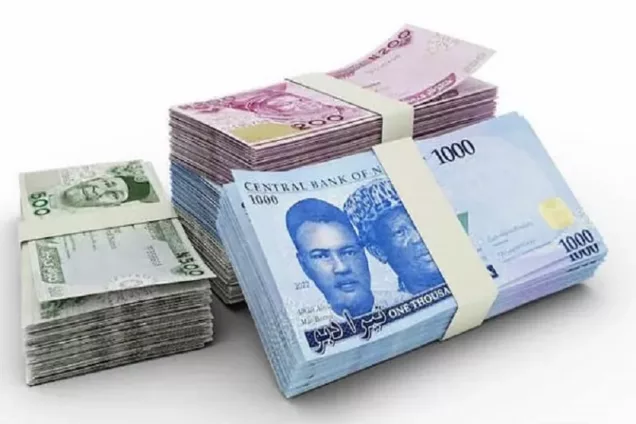
The Nigerian Naira has been listed as the ninth weakest currency in Africa, according to a Forbes report released in September 2025.
The ranking highlights the pressure still facing Nigeria’s economy, even though inflation has started to ease.
Forbes used a currency calculator that tracks real-time data from the foreign exchange market through the Open Exchange Rates API. The system updates every five minutes to show live values based on demand, supply, market mood, and broader economic conditions.
At the top of the weakest currencies list is the São Tomé & Príncipe Dobra (22,282 per $1). This is followed by the Sierra Leonean Leone (20,970), Guinean Franc (8,680), Ugandan Shilling (3,503),
Burundian Franc (2,968), Congolese Franc (2,811), Tanzanian Shilling (2,465), Malawian Kwacha (1,737), Nigerian Naira (₦1,490 per $1), and the Rwandan Franc (1,448).
On the other hand, the strongest African currencies are the Tunisian Dinar (2.90 per $1), Libyan Dinar (5.40), Moroccan Dirham (9.91), Ghanaian Cedi (12.31), and Botswanan Pula (14.15).
Africa has 54 recognized countries, according to the United Nations.
Meanwhile, Nigeria has recorded progress in tackling inflation. Data from the National Bureau of Statistics (NBS) shows that inflation dropped from 24.5% in January to 20.12% in August 2025 the fifth month in a row of decline.
Experts say the drop was helped by steady inflows of foreign exchange from oil sales and remittances, better farm output, and tighter monetary policies by the Central Bank of Nigeria, which kept the lending rate at 27.5%.
The Independent Media and Policy Initiative (IMPI) also reported earlier in September that Nigeria experienced a “rare disinflation” this year, the sharpest mid-year slowdown in inflation in more than 10 years. IMPI chairman, Dr. Omoniyi Akinsiju, predicted that inflation might fall further to 17% by December 2025, giving consumers some relief.










Leave a comment