



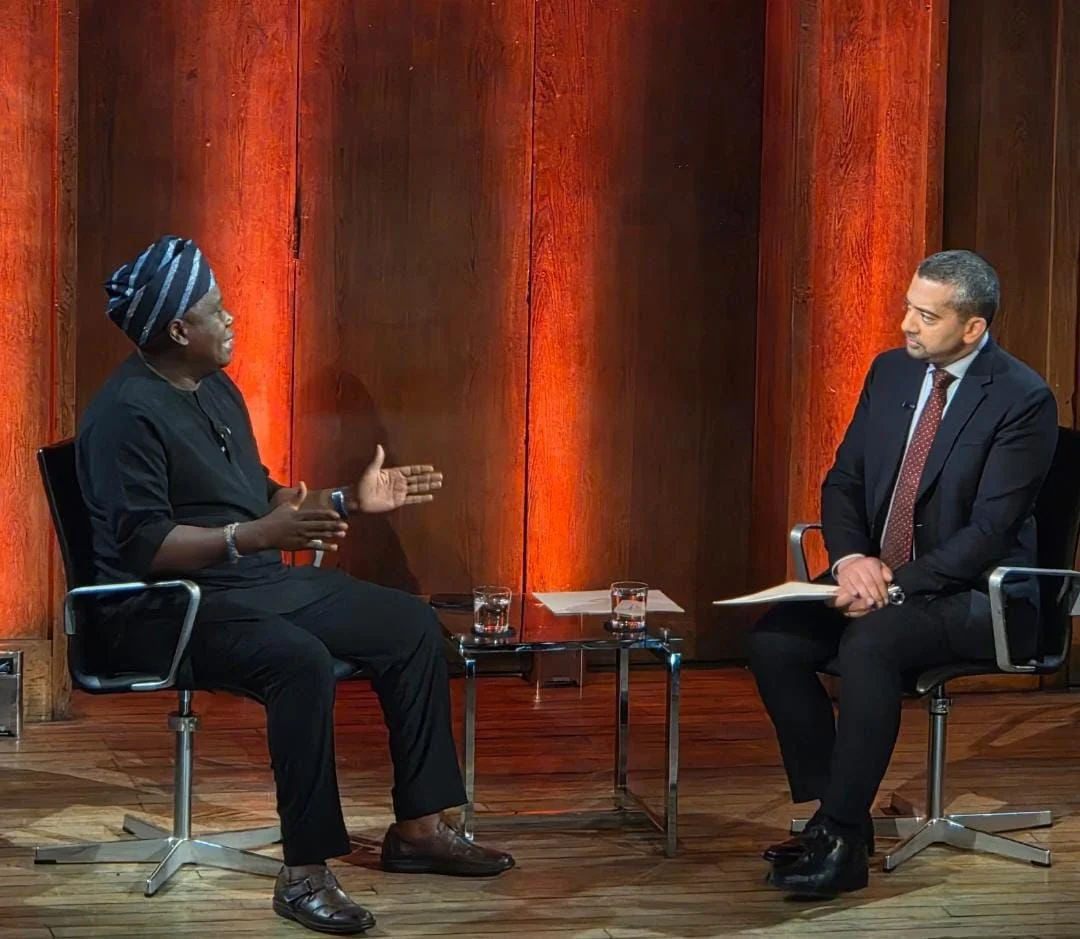
A chieftain of the Peoples Democratic Party, Segun Showunmi, has slammed Al Jazeera journalist Mehdi Hassan for what he described as a hostile and unprofessional interview with Special Adviser to President Bola Tinubu on Media and Policy Communication, Daniel Bwala.
In a post shared on X on Sunday, Showunmi argued that Hassan’s approach crossed the line from tough journalism into personal attacks, serving the interviewer’s ego rather than the public interest.
“Hostility is not journalism. Mehdi Hassan take note. There is a clear difference between tough journalism and outright hostility. One serves the public interest. The other serves the ego of the interviewer.
“Unfortunately, the recent exchange between @mehdirhasan and presidential spokesperson @BwalaDaniel fell squarely into the latter category,” he wrote.
A thumbnail of Aljazeera interview with Tinubu’s aide, Daniel Bwala…Photo Credit: Daniel Bwala
Showunmi described the interview, aired on Al Jazeera’s Head to Head, as a “public ambush,” noting that Bwala’s responses were repeatedly interrupted, questions were framed as prosecutorial traps, and clarifications were brushed aside.
“Serious journalism does not operate this way. The craft of interviewing demands discipline… When the pursuit of humiliation replaces the pursuit of insight, journalism loses its credibility,” Showunmi added.
He also defended Bwala’s previous criticisms of President Tinubu before his defection from the Peoples Democratic Party to the All Progressives Congress, saying political realignment is a normal feature of democratic politics:
“Former opponents become partners when national circumstances demand cooperation. This is neither shocking nor dishonourable; it is one of the defining characteristics of democratic political life.
“To pretend otherwise is either intellectual dishonesty or a deliberate attempt to create sensationalism where none exists.”
Highlighting broader issues, Showunmi noted that the interview failed to focus on Nigeria’s pressing challenges such as economic restructuring, insecurity, and governance reforms.
“A responsible interviewer would have used the opportunity to interrogate the administration’s policies on these matters… Instead, viewers were treated to selective outrage and repetitive interruption,” he said.
Hassan repeatedly confronted Bwala with his own past statements in which he had called President Tinubu a drug baron, corrupt, and unfit to lead, remarks Bwala made before his 2023 defection from the Peoples Democratic Party to the All Progressives Congress.
When Bwala denied making some of the statements, Hassan produced video evidence, triggering fresh ridicule online.
Hassan also pressed him on Nigeria’s deteriorating security situation, citing reports from Amnesty International and Human Rights Watch, with critics saying Bwala appeared unable to counter the figures with data of his own.
Bwala, who faced criticism on social media after the interview, dismissed the backlash as temporary and politically motivated.
The aide said the criticism from what he described as opposition sympathisers was predictable and short-lived, and would not distract him from his duties as Special Adviser to President Bola Tinubu on Media and Policy Communication.
Showunmi’s intervention has reignited debate over the limits of confrontational journalism, underscoring that holding power to account should not come at the expense of professionalism and civility.
“Respectful engagement does not weaken journalism; it strengthens it. Firm questioning does not require contempt. Professionalism does not require aggression,” he said.






Leave a comment